Ziad El Sayed
Email: ziadelsayed at nyu.eduAbout Me
I am an AI researcher and engineer based in London, with an MSc in Machine Learning from University College London, awarded with distinction, and a BSc in Computer Science from NYU Abu Dhabi. My work has been published in ACM Computing Surveys and ACL SRW.
I am currently most interested in studying and mitigating demographic bias in machine learning models, and in the growing presence of AI in mental health and well-being.
Research Interests
Broadly, I am interested in the social consequences of AI systems. I also work on technical questions in interpretability, memory, and representation. Please feel free to reach out if any of this resonates.
- AI and Social Inequality: I am interested in measuring how language and vision models respond to a person's identity, whether stated or inferred from how they communicate or appear, and how this shapes the information and decisions they receive.
- Help-Seeking and Conversational AI: People are increasingly turning to LLMs for companionship, emotional support, and medical advice. I am interested in whose idea of care these models are built around, whether they tell people what they want to hear (i.e. sycophancy), and what that reliance displaces.
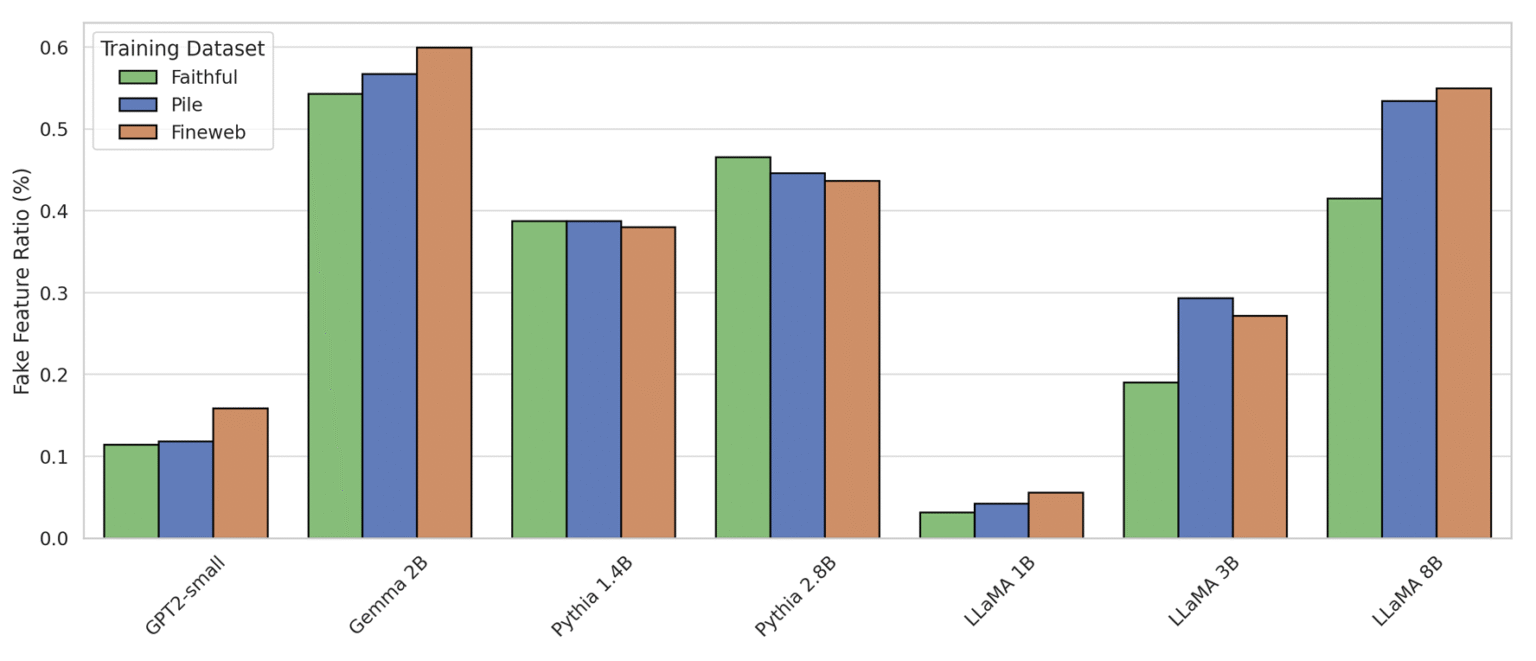
- AI Safety and Interpretability: I am interested in mechanistic interpretability, and have worked on the faithfulness of sparse autoencoders. More broadly, I am interested in the role interpretability can play in detecting and mitigating misalignment.
- Memory in AI Agents: I am interested in the retrieval architectures that keep agents coherent and factually consistent over long interactions, especially as they are deployed in more sensitive settings.
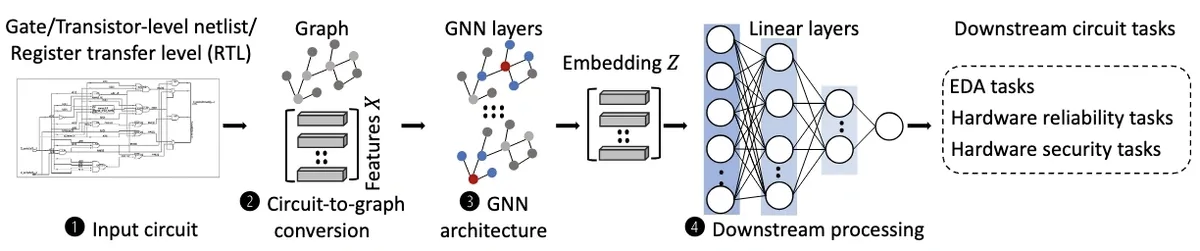
- Graph Neural Networks: I am interested in solutions that leverage graph neural networks (GNNs) to model data with inherent graph-like structures. My research investigates the use of GNNs in advancing integrated circuit design, reliability, and security.
News
- Gave an invited talk at Koç University’s KUIS AI Center on OMem, my work on long-term memory for LLM agents
- Started at Sadel Group in London as an AI Engineer
- My first-author survey on graph neural networks for hardware design, security, and reliability is out in ACM Computing Surveys!
- Represented Oxtractor at Google Cloud’s CTO Connect with DeepMind in London
- Finished my MSc in Machine Learning at UCL, graduating with distinction
- Our paper FaithfulSAE was accepted to the ACL 2025 Student Research Workshop
- Joined Oxtractor, an Oxford University Innovation venture, to work on memory retrieval for real-time agentic systems
- Started working on mechanistic interpretability at UCL, on the faithfulness of sparse autoencoders
- Graduated from NYU Abu Dhabi with a BSc in Computer Science and minors in Applied Mathematics and Business Studies
- Presented my research on multimodal and demographic-based bias mitigation at the NYU Abu Dhabi Capstone Festival
- Awarded over $3,400 to spend the summer researching ML for hardware security at NYU
- Returned to the NYUAD Hackathon for Social Good as an organiser
- Served as a teaching assistant for Language of Computers (CADT-UH 1013), an introductory programming course at NYU Abu Dhabi
- My team won Best Application of Social Good at the NYUAD Hackathon for Social Good with qSa’id, a hybrid quantum-classical ML platform that hit 95.1% accuracy screening for autism
Selected Publications
-
Graph Neural Networks for Integrated Circuit Design, Reliability, and Security: Survey and Tool
ACM Computing Surveys, 58(4), 1-44, 2025
Paper: Graph Neural Networks for Integrated Circuit Design, Reliability, and SecurityGitHub: GNN4IC repository
-
FaithfulSAE: Towards Capturing Faithful Features with Sparse Autoencoders without External Datasets Dependency
Proceedings of the ACL Student Research Workshop, 297-314, 2025